|
|
Overview
| Full Name | Clytia hemisphaerica |
|---|
| Genus | Clytia |
|---|
| Species | hemisphaerica |
|---|
| Common Name | Jellyfish |
|---|
| Abbreviation | C. hemisphaerica |
|---|
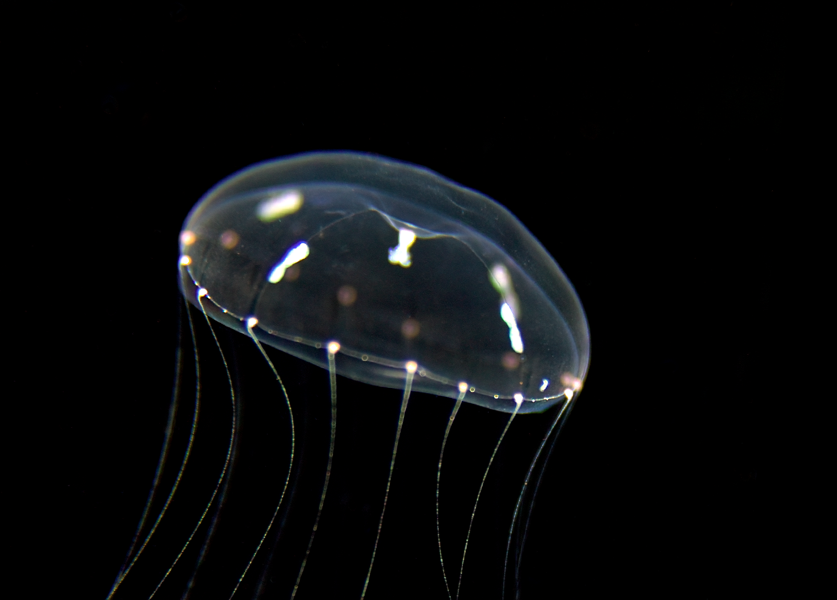
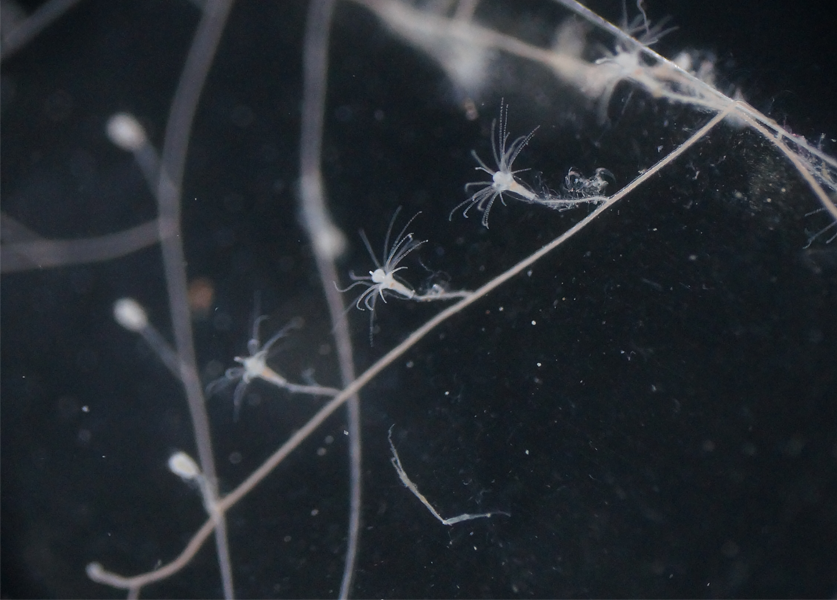
Interest Clytia hemisphaericais a hydrozoan–group cnidarian with both a colonial, vegetatively propagating polyp stage and free-living, sexual medusae. The initial scientific motivation to develop Clytia in the early 2000s came from a group investigating embryo polarity development (E. Houliston and colleagues). Sequence resource development was shared with an Evo-Devo group (M. Manuel and colleagues) seeking a medusa-bearing model from the Cnidaria, The evolutionary interest of the medusa lies in many complex features including striated muscle and sense organs that are absent in the polyp and thus from the main cnidarian molecular models (Nematostella, Hydra). Villefranche zoologist Danièle Carré proposed Clytia based on availability and cultivability. Clytia (= Phialidium) species are common world-wide, and had previously been studied in a variety of domains, including a large body of experimental embryology by G. Freeman. In recent years, Clytia has helped answer questions including regulation of oocyte maturation, origins of embryo polarity and evolution of Hox genes and striated muscle. It has potential to provide a powerful model in many domains (cell/developmental biology; evolution, ecology), and also as teaching/ outreach tool. Distribution Mediterranean Sea and North-East Atlantic Attractive features - Transparent eggs, embryos, larvae and medusae for microscopy
- Embryos large enough (180µm diameter) for easy micromanipulation
- Small jellyfish (1cm in diameter)
- Short life cycle (2-3 months) including a vegetative polyp stage, which provides a continuous supply of genetically identical jellyfish
- Convenient light-induced spawning and peptide-induced metamorphosis
Tools - Assembled genome sequence (450 MB) and many transcriptome resources soon available
- Self-crossed immortal polyp colonies available which can be easily distributed as ‘cuttings’ of the immortal polyp colonies between labs
- Gene knockdown is routine and gene edited colonies are being successfully developed
Selected references - Carre, D. and Carre, C. (2000) Origin of germ cells, sex determination, and sex inversion in medusae of the genus Clytia (Hydrozoa, leptomedusae): the influence of temperature. J Exp Zool 287, 233-42 Freeman, G. The role of polarity in the development of the hydrozoan planula larva. Wilhelm Roux's Archives 190, 168-184 (1981).
- Houliston, E., Momose, T. Manuel, M. (2010). Clytia hemisphaerica: a jellyfish cousin joins the laboratory. Trends Genet 26, 159-167
- Lapébie, P et al (2014). Differential Responses to Wnt and PCP Disruption Predict Expression and Developmental Function of Conserved and Novel Genes in a Cnidarian. PLoS Genetics, 10(9): e1004590. doi:10.1371/journal.pgen.1004590
- Steinmetz, P.R. et al. (2012). Independent evolution of striated muscles in cnidarians and bilaterians. Nature 487, 231-234
Biomaterial Browser
The following browser provides a list of biomaterials associated with this organism.
Pages
Count Summary
The following features are currently present for this organism
| Feature Type | Count |
|---|
| Scaffolds | 7,644 |
| Genes | 45,872 |
| Transcripts | 73,855 |
| Proteins | 25,087 |
Transcript Browser
The following browser provides a quick view for new visitors. Use the searching mechanism to find specific features.
Pages
|